When I started my career working with solar companies, the difference between wasted site visits and closing the right deals wasn’t just luck. It was about knowing who to contact, when, and why. These days, with platforms like Sunate bringing intelligence to every step, the science of scoring leads—ranking them for their potential—is transforming the way solar teams operate.
Why focus matters: quality over quantity
I have seen sales teams stretch their efforts thin, chasing every inquiry. That approach usually leads to long pipelines, missed quotas, and tired reps. Prioritizing prospects isn’t about ignoring the rest—it’s about maximizing time and effort on those most likely to convert and benefit from solar. Most high-performing solar teams now lean on data-driven strategies, not gut feeling, to decide where to focus.
With hundreds of homeowners and businesses considering solar, it’s not realistic to treat each the same. That’s where smart lead prioritizing comes in. But how do you build a system that tells who’s “hot” and who should wait? It starts with understanding what makes a property—and its owner—a perfect fit for solar.
What makes a lead “high value” in solar?
In my experience, high-potential leads share several traits. They tend to own property with suitable rooftops, show real interest in renewable energy, and might have rising utility bills or past engagement with solar brands. Some might want to add storage, as battery attachment rates are rising to 12% for residential and 8% for non-residential installs, according to recent Lawrence Berkeley National Laboratory data.
- Roof type, orientation, and shading
- Estimated energy usage
- Ownership status (owner-occupied vs. renter)
- Interest shown, such as responding to ads or requesting info
- Geographic or regulatory advantages
- Potential for battery integration
- Engagement with education or marketing materials
The best lead scoring models—like what I’ve seen Sunate offer—combine these hard facts with softer “signals” of intent. That way, both property data and human behavior are captured in the score assigned to every prospect.

How data analytics and AI change the game
I remember how ground-breaking it felt the first time I saw predictive analytics assess a new solar territory. Instead of guessing, reps now receive a map with the best prospects flagged in real time, no more clipboard-and-shoes worn thin. AI doesn’t just offer speed. It brings patterns forward. For example, Sunate’s use of AI lets teams find “lookalike” prospects—homes or businesses that share traits with your past best customers—across states like Massachusetts, Connecticut, and Rhode Island.
The shift isn’t only about faster results. Real-time property databases and predictive models mean fewer door knocks, less time wasted on mismatched prospects, and more deals closed each month. As I’ve tracked teams using tools like Sunate, some report 4x increases in conversion, simply because the upfront sorting is sharper.
Setting up your solar lead scoring system: step by step
Building a winning process is possible for any solar sales operation. I usually walk teams through these steps. Segmenting the work makes lead ranking actionable instead of daunting.
- Define your “ideal” customer—Start with data on your most profitable installations. Was it a family with high bills, a commercial building with big roof space, or a school looking for green branding?
- List key criteria—Pick the most telling data points. Roof size, shade, past engagement, credit score, location, and openness to storage are the usual suspects. Check how each impacts win rates.
- Assign values—Give points for the best attributes. For example, “south-facing roof adds 10 points,” or “engaged with 3 marketing emails, +15.” Some teams score leads from 1–100, for easy sorting.
- Feed in the data—Depending on your CRM or intelligence tool (like Sunate), either upload or connect feeds with property records, utility usage, and marketing touchpoints.
- Test, track, and tune—Make a habit of checking which scores convert. Adjust weights to reflect reality. Maybe your region closes more deals in neighborhoods with specific incentives.
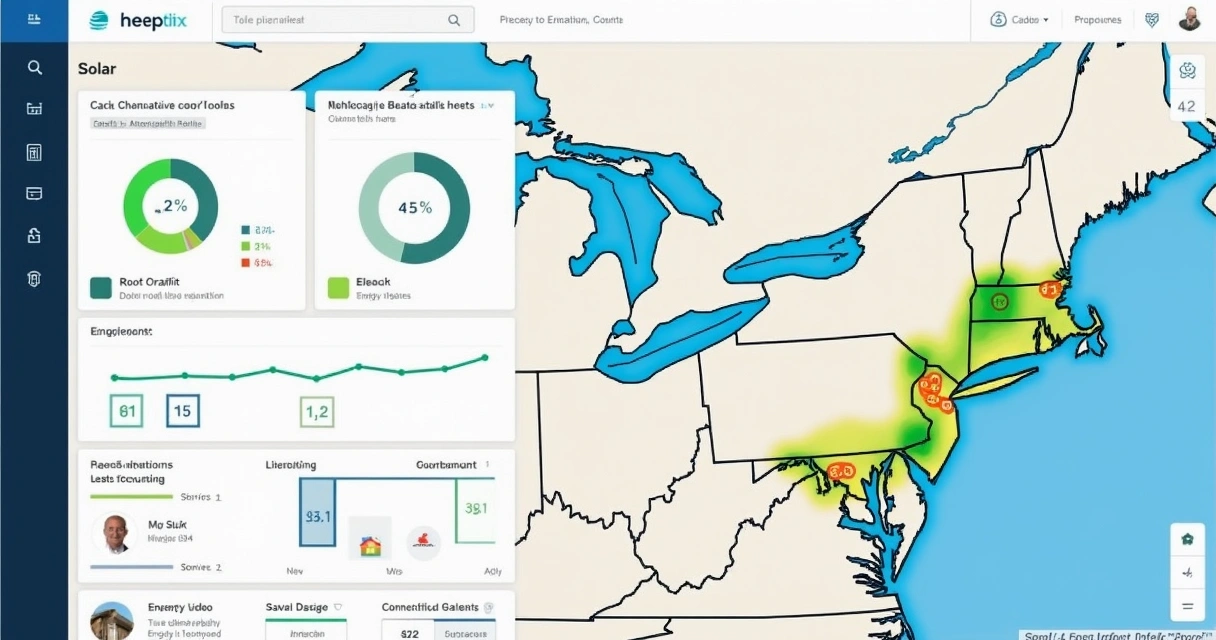
One of my favorite examples: A regional installer in Massachusetts used AI-powered scoring for both residential and commercial leads. By flagging buildings over 10,000 square feet with low roof obstructions and owners who opened educational emails, they halved their average sales cycle. They even worked with Sunate to map these attributes in real time for their reps.
Integrating with CRM and automation: the heart of sales efficiency
Modern solar sales teams no longer wait for weeks to qualify leads. Integrating predictive scoring into your CRM keeps everyone on the same page, helps automate outreach, and ensures no hot lead slips through the cracks. An automated system triggers alerts, nurtures colder prospects, and schedules follow-ups exactly when needed.
For managers, the benefits are clear: you can track rep activity, optimize marketing dollars, and forecast reliably. With integrated intelligence, sales teams like those using Sunate don’t just collect leads; they turn every data point into action.

Personalizing outreach and aligning teams
The beauty of smart scoring is that it lets your team tailor every conversation. If a homeowner’s highest need is lowering monthly bills, the proposal can highlight battery benefits and new net billing rules, like those raising attachment rates to 60% in some U.S. states (as tracking data shows).
I always remind teams: High scores don’t mean “sell now”—they mean “personalize and act quickly.” Pre-qualification data, like language spoken or credit rating, means you can match them with the right rep, offer content in their language, or schedule site visits when likelihood is highest.
Marketing and sales teams avoid finger-pointing, because everyone trusts the same score. Alignment is easier when both sides see why a prospect is hot—and why others should be nurtured instead of forced.
Segmenting for growth
Segmenting isn’t just about “now” and “later.” I recently saw a commercial-focused team build lists for public schools, retail chain managers, and logistics centers. Each got personalized drip campaigns and site assessments. For homeowners, segmenting by household size and solar interest delivered content that felt customized—even though it was built on shared data.
You can learn more about targeted lead generation, scoring, and prospect segmentation by reading recent lead generation insights and consulting real project case studies, such as how sales intelligence transformed a local installer’s workflow.
Measuring results: what success looks like
What changes after scoring is in place? Conversion rates go up. Site visits focus on the right homes and businesses. Reps save time and close deals quicker. Data from Lawrence Berkeley Lab also shows homes with PV systems gain a $15,000 average value boost, matching incentives with high-scoring prospects who will see real return on investment.
In my opinion, teams that invest in smarter scoring see a cultural shift, too. Reps feel success is in their hands—and that means staying motivated, competitive, and consistent. Integrated AI, frequent feedback, and segment-driven outreach shape a closed-loop system that keeps getting sharper.
- Fewer wasted visits
- More accurate forecasting
- Higher deal velocity
- Smoother sales-marketing handoffs
- Clear learning from wins and losses
For more on the science behind conversion and predictive outreach, the sales intelligence section of the Sunate blog and the latest on artificial intelligence in solar sales both offer up-to-date insights.
Conclusion: smarter prospecting, faster growth
Today’s solar market is moving fast, and tomorrow’s leaders will be those who treat every lead as a science experiment—constantly refining scoring models, strengthening sales and marketing alliances, and acting with speed and focus. My advice? Don’t just chase every rooftop—map the ones that matter, use data the smart way, and trust the results.
Work smarter, close faster, and turn informed prospecting into your competitive edge.
If you want to see how data and AI can transform your territory, book a Sunate demo and see your best opportunities mapped for you—right now.
Frequently asked questions
What is solar lead scoring?
Solar lead scoring means assigning a value or score to every prospect based on their likelihood to become a customer for solar products or installations. This process uses data like property characteristics, owner engagement, and energy usage to guide sales teams towards opportunities most likely to close. Scoring systems help prioritize sales resources efficiently and reduce wasted efforts.
How does lead scoring improve solar sales?
Lead scoring streamlines the sales process by ranking prospects according to their fit and readiness to buy solar solutions. This makes it possible for reps to spend more time on high-potential clients and less on leads that are unlikely to convert, which increases close rates, shortens the sales cycle, and usually boosts revenue.
How can I start scoring my solar leads?
To begin, define what an ideal solar customer looks like for your business. Collect data about property details, energy needs, owner interest, and engagement. Assign points or weights to each factor and track final scores in your sales tracking software or CRM. Platforms like Sunate automate much of this work, feeding instant property and owner data into your model for you.
What are the top factors in solar lead scoring?
The most important elements are roof suitability, energy consumption patterns, property ownership, interest signals, and engagement with solar education or marketing. In some areas, willingness to add battery storage and the presence of supportive policies or incentives also push a lead higher up the priority list.
Is it worth using lead scoring for solar businesses?
Yes—smart prospect ranking consistently drives higher conversions, reduces wasted time on cold leads, and helps companies adapt their sales strategy as the market evolves. I’ve found that businesses implementing structured scoring can quickly measure what works, make better forecasts, and see more deals closed with less manual effort.