
In my two decades as a writer focused on sales and solar markets, I’ve witnessed a profound shift in how solar companies find and win customers. The rise of digital prospecting platforms, powered by AI and abundant data, has changed solar sales—from legwork and guesswork toward strategy and precision. If you’re tasked with growing a pipeline, you’ve probably wondered: how can my team spend less time searching and more time closing? Today, I’ll share what truly matters when it comes to prospecting in solar, how to assess tools, and why solutions like Sunate represent more than just another dashboard—they’re a way to supercharge your territory, your quotas, and your mindset.
Why sales prospecting in solar has changed
Ten years ago, most solar sales reps would begin their day with a stack of printouts, a GPS, and determination. Door-knocking was common, phone calls went unanswered, and data about what made a property a good fit was basic at best. Fast-forward to today: solar has scaled rapidly. According to the National Academies Press, utility-scale solar now provides about 3.9% of all U.S. electricity. As the business grows, so does the need to stop chasing “maybe” and focus on leads who are most likely to convert.
Every wasted site visit is lost time—and lost revenue.
That’s why I see teams embracing prospecting tools built just for solar sales. These platforms turn property data, AI, and workflow integration into a daily advantage. The goal isn’t to replace good reps, but to empower them.
How prospecting platforms help you find high-potential leads
In my research, the most impactful tech for solar teams is the kind that helps you work smarter, not just faster. The real innovation isn’t just having more information—it’s about filtering out the noise and surfacing the highest potential leads. Here’s how well-crafted prospecting solutions—like Sunate—make this possible:
- Instant access to granular property snapshots: Instead of guessing if a house has the right roof angle or enough daily sun, you can now scan millions of properties in seconds, reviewing up-to-date details on roof size, age, orientation, and shading.
- Data-driven lead scoring and pre-qualification: AI analysis goes beyond ZIP codes, blending local energy tariffs, home value, utility usage, and homeownership data to rank which prospects have true ROI potential.
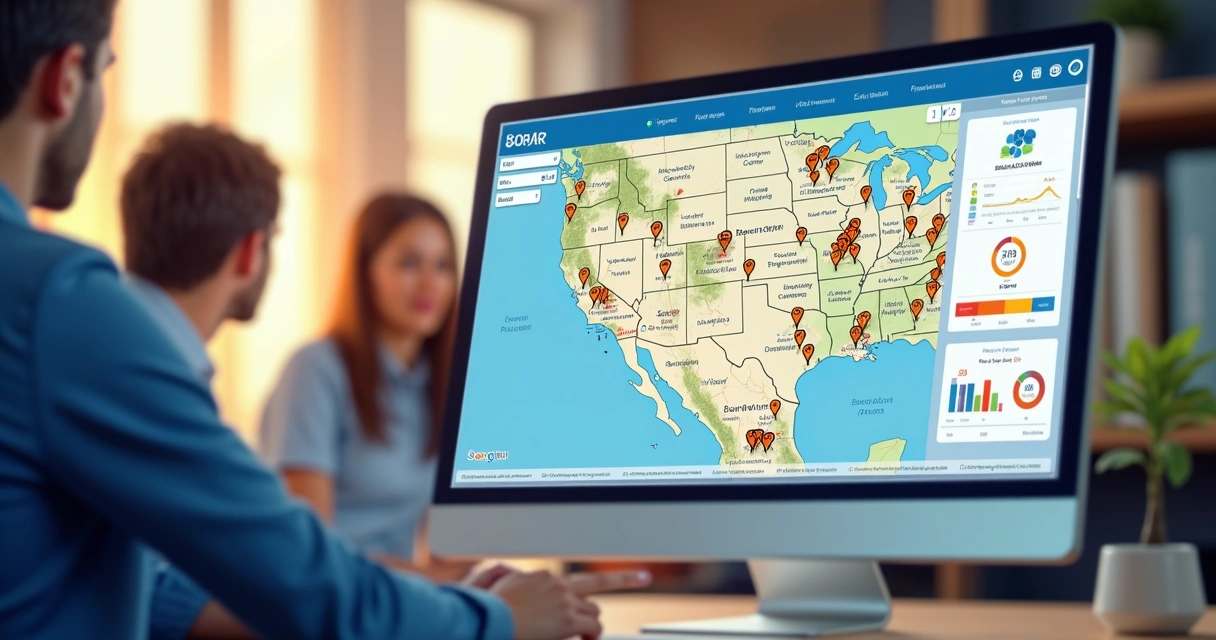
- Territory mapping and visualization: You can see, on a live map, where clusters of ideal homes or businesses are located—saving hours otherwise spent scanning street views or public records.
- Automated multilingual outreach: The most advanced systems allow team-wide outreach sequences in several languages, unlocking doors in multilingual markets.
Instead of chasing cold lists, I see salespeople focusing on real opportunity—and it works. Teams report as much as 4x more qualified consults and shorter sales cycles.
Features every solar sales team should expect
When I sit down with company owners or sales managers, the question always comes: what makes one platform stand out over another? While every team has unique needs, a few features make all the difference. Let’s break them down.
Integrated CRM and contact management
An integrated CRM stores all notes, property data, and conversation history in one place for each prospect. This enables smoother hand-offs between team members, ensures no task gets forgotten, and provides real insight into how your pipeline is performing. Automated reminders for follow-up make sure no lead slips through the cracks.
Instant property data and roof analysis
With access to up-to-date imagery, dimensions, roof type, tilt, azimuth, age, and shading estimates, you gain instant clarity on whether a site is worth visiting. AI helps flag properties where structural issues might delay install, or where limited solar access makes the pitch unlikely to close.

Lead filtering and dynamic search
I’ve watched junior salespeople get overwhelmed by long prospect lists that bury their best leads. Powerful platforms allow you to quickly filter by ownership (owner vs. tenant), credit score range, energy usage, utility provider, system type, or even proximity to existing installs. This focused approach means you start your day with prioritized outreach.
The right filter means talking to the right customer, at the right time.
Automated proposal generation
Some solutions, like Sunate, can produce customer-ready proposals with production estimates and financial models at the click of a button. This means reps can present a tailored solution during that critical first call, not after days of paperwork.
Team management and workflow tracking
For managers, seeing how reps are advancing through stages, identifying bottlenecks, and reallocating accounts where needed keeps everyone focused and accountable. Dashboard metrics help identify which outreach and follow-up tactics are delivering.
How AI improves lead quality
In the past, picking the best leads often came down to gut feeling and luck. With the arrival of AI, things have changed dramatically. Here’s what I’ve observed:
- Real-time roof and site qualification: By analyzing satellite imagery, AI can detect obstructions, roof age, and type, which would otherwise require a drive-by or paid inspection.
- Predictive customer scoring: AI not only finds open meter accounts or EV-ready homes, but also learns from past successes to prioritize who’s most likely to sign.
- Automated consumption analysis: By looking up historical utility usage and matching it with local tariff and policy changes, you get realistic estimates—before the first call.
In my experience, this results in fewer wasted site visits and a pipeline full of serious buyers. With platforms such as Sunate, reps can now pre-qualify every target before stepping out the door.

Bringing everything together in your workflow
Choosing the right prospecting technology is only half the puzzle. Embedding it into your daily workflow makes the impact real. Over time, I’ve found these steps to be most useful for teams rolling out new tools:
- Set clear prospecting goals for your reps. Are you aiming for more appointments, faster closes, or improved team coordination? Start with measurable targets.
- Automate repetitive tasks like manual property research, list sorting, and paperwork with the platform, freeing reps to focus on conversations and relationship-building.
- Hold regular reviews to adjust filters, revisit lead scores, and share feedback about how the tool works in practice.
- Cross-train your team so everyone can step up if a lead owner is busy or away. This prevents pipeline slowdowns and avoids lost deals.
Integration with your existing tools, whether it’s calendar apps, e-signature solutions, or marketing automations, ensures nothing gets siloed. Solar sales is still a people business—but people need better tools.
Is your team growing? Build for scalability
One question I get asked is whether these tech-driven sales platforms work equally well for small and large teams. My answer: yes, if you think ahead.
If your team is just starting, you’ll appreciate being able to focus on a handful of high ROI prospects. But as you add reps, or branch into commercial clients, you need solutions that support:
- Role-based permissions and account routing, to divide workload.
- Multi-channel outreach tracking, so you aren’t duplicating efforts.
- Territory management, for both residential and commercial prospects.
- Reporting tools to measure what’s working and adapt quickly.
- Support for multilingual campaigns (especially in diverse states like Massachusetts and Connecticut).
The beauty of AI-powered prospecting is it grows as you grow. At Sunate, scalable design ensures even the largest sales teams get the right data, right when they need it.

The impact on sales velocity
It’s natural to wonder: is all this investment worth it? The answer lies in results. I’ve seen firsthand that salespeople using these platforms spend less time doing repetitive research, reach more qualified prospects every day, and reduce the back-and-forth required to close a deal.
Data-rich prospecting platforms enable teams to qualify, present, and close faster—sometimes in hours instead of days. Sales velocity increases, commissions rise, and customer satisfaction improves due to fewer delays and less confusion.
For those new to digital sales tools, check out these resources on solar lead generation tactics and detailed sales intelligence strategies.
Getting the most from your prospecting tools
It’s easy to get overwhelmed with new software and big promises. Over years of consulting with sales leaders, I’ve gathered these practical tips to help your team get maximum value:
- Invest in onboarding: Take the time to let your reps learn features and practice searches. This prevents frustration and builds confidence.
- Encourage regular team feedback: Who found a shortcut? Who needs help? Sharing tips and challenges improves adoption.
- Keep updating filters and criteria: As your ideal customer profile shifts, so should your settings—stale leads mean wasted time.
- Celebrate early wins: Share stories of faster closings or higher commissions to build excitement (and momentum).
In my experience, teams who consistently revisit their approach and adapt to new data are the ones who get outsized returns.
Common sales challenges—and how the right tools help
Solar isn’t free of hurdles. Even seasoned teams face a few recurring problems:
- Wasted visits to homes that aren’t suitable for solar install.
- Difficulty identifying true decision-makers—especially in a multi-owner or commercial property scenario.
- Lead burnout, where reps spend time on cold lists and see little progress.
- Administrative overload—too much time logging or gathering information by hand.
- Gaps between marketing and sales, with unclear accountability for follow-up.
With advanced property and customer qualification, most of these issues shrink. The right platform surfaces verified, relevant data and enables teams to act on it. For an example of how prospecting data shapes outreach success, you may want to review this post on geo-targeted solar sales.
Platforms like Sunate, purpose-built for solar, also support regional features and language customization—ensuring teams can work efficiently in places like Massachusetts, Rhode Island, and Connecticut, which are known for policy diversity.
For more on how regulatory shifts affect selling, browse the solar energy policy section.
Conclusion: Solar sales, the smarter way
If you’ve felt the pain of a long sales cycle, missed deals, or weak pre-qualification, the message is clear: smarter prospecting is the next frontier for growth. By giving your team the power to find, filter, and win the best leads—without drowning in paperwork—you unlock the real value of their time.
The tools you choose matter. With Sunate, your team gets not just another tech platform, but a real-world advantage in the race for the solar customer of tomorrow.
For more examples and inspiration on prospecting success, I recommend this case study: navigating the changing solar sales landscape.
Ready to leave behind guesswork and guess lists? Book a Sunate demo today and discover which opportunities are waiting—in real time, mapped, and ready for you.
Frequently asked questions
What are solar prospecting tools?
Solar prospecting tools are digital platforms that help sales teams quickly identify, pre-qualify, and reach out to homes and businesses most likely to benefit from solar. These tools combine detailed property data, AI-powered analytics, and workflow features to take the guesswork out of finding high-value leads. Instead of old-fashioned canvassing, reps use these solutions to focus efforts where the chances of closing are strongest.
How do solar prospecting tools work?
Most prospecting platforms bring together public and proprietary data about properties—like roof orientation, size, owner information, and energy consumption. With AI and mapping, users can search territories, filter prospects based on ideal criteria, and even generate proposals instantly. In platforms like Sunate, real-time insight and automation help sales reps know where to call or visit next, maximizing efficiency and close rates.
Which solar lead tools are most effective?
The best lead tools offer a blend of deep, accurate property data, intuitive search and filtering, integrated CRM capabilities, and automated outreach or proposal generation. AI-driven analysis, as offered by modern platforms, ensures every prospect fits your preferred profile and that time isn’t wasted on unsuitable sites. Tools that adapt to your territory—like Sunate’s focus on specific Northeast states—are especially effective for results.
Are solar prospecting tools worth it?
Yes, teams consistently see more qualified appointments, fewer wasted site visits, and improved close rates when using these solutions. The investment often pays for itself many times over through better pipeline management and increased sales velocity. For organizations looking to scale, prospecting platforms keep sales growth sustainable and focused on true opportunity.
Where can I find top solar tools?
If you’re looking for a reliable platform, it’s best to start with those designed from the ground up for solar sales. For instance, Sunate offers territory-specific data, instant qualification, and workflow features tuned for residential and commercial solar teams. Exploring the latest in sales intelligence resources will also help you stay current on best practices and new platform releases.