When I think back on the early days of solar sales, I recall entire teams spending hours trudging down every block, knocking on every door, hoping someone might care about a pitch for solar. But things have changed. In today’s landscape, targeted solar door-to-door outreach always wins over random broad canvassing. It’s smart use of both data and personal connection, and it’s the difference between spinning your wheels and closing real deals.
Thanks to platforms like Sunate, qualified solar sales pros now have instant access to property-level data, letting them skip unworkable homes and pinpoint high-potential leads from the jump. If you want to master how to sell solar door to door—or any face-to-face solar selling—this guide covers the seven tactics I rely on for results.
1. Why targeted door-knocking is better than broad canvassing
Sometimes, it’s tempting just to go door-to-door in every neighborhood, believing effort will eventually pay off. But the reality is, homeowners are getting wise to solar pitches, and consumer tolerance for time-wasting, generic outreach is at an all-time low. As recent reports about misleading door-to-door sales tactics highlight, reputation matters—and abuse of “spray and pray” hurts us all.
I’ve learned the smartest approach is to use mapping tools and sales intelligence to identify homes or businesses with:
- Unshaded, south-facing roofs
- Recent high energy bills by property type
- Owner-occupied status for a likely decision-maker
- Favorable roof age and condition
- Areas where incentives are available
That switch—from broad canvassing to targeted outreach—lets me arrive at the door actually prepared to solve a problem a homeowner might have. It’s not just about knocking more; it’s about knocking smarter.
2. Pre-qualifying leads with digital data and rooftop assessment
Using technology before I ever lace up my shoes is a giant time-saver. I rely on platforms like Sunate to instantly check a property’s roof material, shading, orientation, and even layers of history—like whether it’s been reroofed recently or if major updates exist. Giving priority to homes and businesses where the odds are already high makes every visit more likely to be worthwhile.
An eye-opening moment from my experience was when I used Sunate’s property database to filter for houses in a specific region that hadn’t had a new roof in twenty years. Instead of spending all day on homes that might need $25,000 in repairs before going solar, I set appointments with real, bankable prospects—saving hours of labor and frustration.
This qualification isn’t about databases alone. I always take a few quick glances at Google Street View, local records, and utility bill data when possible. Recent guidance by organizations like the Citizens Utility Board warns that unqualified leads have contributed to poor experiences and even scams. The bottom line? Well-screened leads protect your professionalism, and your time.

3. Crafting a flexible, benefit-driven sales script
Even the best digital leads are only as good as the conversation that follows. Over years on the streets and at the kitchen table, I’ve learned the single best script is one you can adapt. Start with your core value—like energy savings, environmental impact, or cash incentives—but be ready to pivot based on what you see and hear.
Here’s an approach I favor:
- Open with a local or timely reason for your visit (new incentives, rebates, rising utility rates in the neighborhood)
- Have three concise bullet points for savings, reliability, and incentives ready
- Take clues from body language and let the homeowner talk about their own energy pain points
- Ask specific, answerable questions (“How old is your roof?” “Do you have any shade issues?” “Are you more interested in lower bills or increasing home value?”)
The most effective script is conversational, not mechanical. People don’t buy solar—they buy energy freedom, predictable bills, and sometimes just a little less worry about the environment.
4. Bringing visual aids and design tools to the doorstep
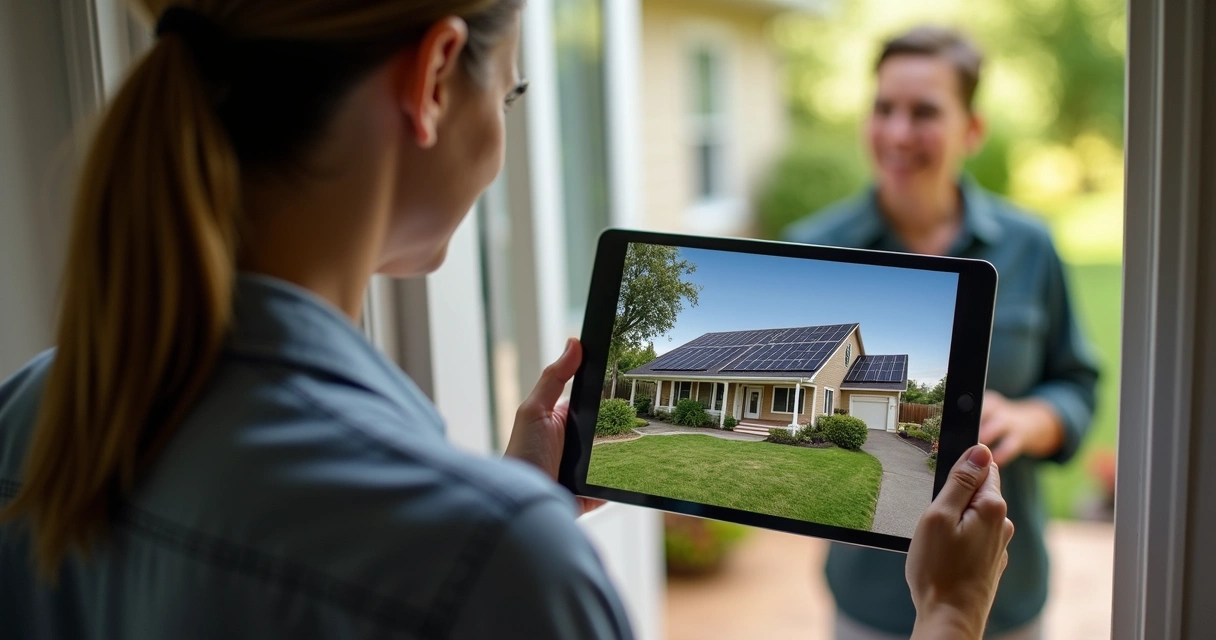
Nothing stops a conversation quicker than a stack of dull paperwork or too many “what ifs.” Homeowners respond to vivid, simple visual evidence. I’ve had great results showing up with a tablet preloaded with:
- Before-and-after images of homes that added solar
- Quick mock-ups of what panels look like on their own roof
- Graphs of bill reductions based on sample usage data
- A map showing current solar installations in their area
Tools like Sunate can now generate an instant visual of the roof, which helps people picture the outcome on their own house—without ever climbing a ladder. It’s a small psychological shift, but when someone can see lower bills and a better roof right in front of them, the idea feels real.
5. Handling objections with clear facts and real references
Objections are natural—and at the door, they’re often fast and blunt. Some of the most common ones I get are:
- “Solar is too expensive up front.”
- “I don’t plan to be in this home long enough.”
- “Do these panels even last?”
- “I heard about problems with salespeople.”
What I’ve found works best is to meet concerns with specific, trustworthy information—no lectures, no complicated education. For example, when a homeowner asks about technology reliability, I cite U.S. Department of Energy studies showing median annual solar performance loss is only about 0.75%, proving well-installed solar continues to deliver for decades (source here).
When money is the worry, I mention that about 70% of residential installs nationwide are financed through solar loans, with transparent options that focus on predictable savings (see the Center for Responsible Lending). Facts like these diffuse tension and demonstrate I’m not just saying what they want to hear.
6. Efficient follow-up using digital CRM and mobile tools
Almost nobody says “yes” on the first knock. That’s why my best results have always relied on thoughtful, structured follow-up. I use a mobile CRM to:
- Log every homeowner visit with notes on their questions and hesitations
- Schedule texts or automated emails for appointment reminders
- Send quick check-ins with answers to specific objections
- Track when incentives go live in their zip code
What’s made a major difference for those working on Sunate is the built-in pre-qualification and multilingual outreach options, which streamline second and third touches. Instead of chasing every maybe, I focus my attention where the odds of a close are already in my favor. It takes far less time to get a sale once the right system is in place.

7. Harnessing referrals, tracking progress, and growing knowledge
Solar buying—and selling—is contagious. After someone signs on, a neighbor is always watching. I regularly ask happy clients if they’ll refer a friend or let me host a short Q&A session at their home (sometimes as simple as three chairs and a few handouts on their front porch). That word-of-mouth means more qualified leads down the line.
To keep improving, I make a point to:
- Review which scripts or tactics led to appointments (using tools like those found in sales intelligence case studies)
- Study up on state and local incentives, using resources found in solar energy updates
- Stay on top of lead generation trends at places like the latest lead generation research
What you don’t improve, you repeat. And in the fast-changing world of solar, knowledge pays off.

Tips for confidence and staying resilient
Sometimes, doors slam. Recitations of “not interested,” “go away,” or worse, pile up. There are days I’ve thought, “Is anyone really listening?” But solar is growing rapidly, with about 40% of recent new U.S. electric capacity coming from solar. There are thousands of opportunities, but sometimes it takes dozens of tries for just one “yes.”
Persistence turns conversations into contracts.
I focus on small wins—a good conversation, a smile, a door that actually opens. Each “no” brings me closer to a “yes.” I practice my script, keep my tone positive, and rely on real results (like case studies at this post or this one) to remind myself that solar is changing lives and saving money. Confidence grows every time I see a neighbor wave from under brand-new solar panels they wouldn’t have without a knock on their door.
Conclusion: Connect smarter, close faster, and outperform in solar sales
Every year, more homes in places like Massachusetts, Rhode Island, and Connecticut become candidates for solar. The market potential is huge—but only for those who step up with clarity, real solutions, and a personalized approach. By using targeted data, crafting personalized conversations, leveraging real visuals, handling objections with facts, following up efficiently, riding referral momentum, and sharpening your knowledge, you make yourself the kind of solar advisor people trust.
If you want to see for yourself how Sunate can highlight high-potential leads—mapping opportunity before you knock, and putting you in front of the real winners—I invite you to book a quick 15-minute demo and see your best territory mapped in real time. Move your solar sales career from guesswork to results today.
Frequently asked questions
What is solar door-to-door sales?
Solar door-to-door sales is a direct approach where sales professionals visit homes or businesses in person to present the benefits of solar energy and offer tailored solutions for installation. It requires personal interaction, trust-building, and a firm understanding of both the product and the prospect’s needs.
How do I start selling solar door to door?
I recommend using sales intelligence platforms to first identify the best properties to target. Then, prepare a flexible script based on energy savings, incentives, and real customer stories. Proper product knowledge and a willingness to listen are keys. Practice your delivery, be ready for questions, and expect to follow up several times before closing a deal.
What are the best tips for solar sales?
From my experience, the best tips include: always pre-qualify your leads, use modern visual aids or digital map tools to help prospects see the benefits, handle objections with facts, follow up reliably, and make the most of satisfied customer referrals. Tracking your results and building your knowledge are also just as important.
Is door-to-door solar selling profitable?
Yes, many solar professionals report strong earnings from door-to-door sales, especially as the market for clean energy continues to grow and new incentives roll out regularly. The key is to use targeted lead selection, clear communication, and efficient follow-up. Tools like Sunate help maximize profitability by focusing your time where it counts.
How can I handle rejections in solar sales?
Rejection is part of door-to-door sales. I deal with it by focusing on the learning experience of each visit, maintaining a positive attitude, and viewing every “no” as one step closer to a “yes.” After hearing dozens of rejections, I sometimes take a few minutes to review my wins, remind myself of the value I bring, and keep practicing and refining my approach.